Analysis

picsum id: 84

Italy’s Political Economy: Between Fiscal Constraints and Reform Imperatives

Expert Comment — Europe Programme 5 February 2026 Italy has long been Europe’s most enigmatic major economy — a country with immense potential constrained by structural weaknesses, political instability and the highest public debt in the eurozone after Greece. In 2026, Italy faces a familiar set of challenges but in a new and more difficult […]

Italy’s Political Economy: Between Fiscal Constraints and Reform Imperatives Read More »

picsum id: 211

The 12.35-Cent Curse: Why Turkey Will Pay Double the Global Market Price for Electricity to Rosatom for 15 Years and Call It Energy Independence

Expert Comment — Eurasia Programme 2026-02-05 TWhen the first reactor at the Akkuyu Nuclear Power Plant begins commercial operation in 2026, every Turkish household and business will start paying a hidden tax that will persist for 15 years. The plant’s electricity will be purchased at a guaranteed price of 12.35 US cents per kilowatt-hour. The

The 12.35-Cent Curse: Why Turkey Will Pay Double the Global Market Price for Electricity to Rosatom for 15 Years and Call It Energy Independence Read More »

picsum id: 255

The Lira’s Long March: Why Turkey’s Currency Crisis Is a Structural Not a Cyclical Phenomenon

Expert Comment — Eurasia Programme 26 January 2026 Turkey’s economic narrative has been one of the most dramatic in emerging markets. From the growth miracle of the 2000s to the currency crises of the 2020s, the country now stands at a crossroads. The return to orthodox monetary policy under Governor Hafize Gaye Erkan and her

The Lira’s Long March: Why Turkey’s Currency Crisis Is a Structural Not a Cyclical Phenomenon Read More »

picsum id: 582

The United Kingdom’s Post-Brexit Realignment: Trade, Finance and the Search for a New Global Role

Expert Comment — Europe Programme 22 January 2026 Five years after the conclusion of the Trade and Cooperation Agreement with the European Union, the United Kingdom’s post-Brexit economic and strategic realignment remains very much a work in progress. The government’s flagship “Global Britain” agenda has achieved some notable successes — including accession to the Comprehensive

The United Kingdom’s Post-Brexit Realignment: Trade, Finance and the Search for a New Global Role Read More »

picsum id: 778

France’s Defence Transformation: European Strategic Autonomy and the Test of Credibility

Expert Comment — Europe Programme 15 January 2026 France has long been the most vocal advocate of European “strategic autonomy” — the idea that Europe must develop the capacity to defend itself independent of the United States. Under President Macron, this concept has moved from a fringe aspiration to a central pillar of French and

France’s Defence Transformation: European Strategic Autonomy and the Test of Credibility Read More »

picsum id: 140

Beyond the Rouble: Why Russia’s War Economy Is Headed for a Structural Reckoning in 2027

Expert Comment — Eurasia Programme 12 January 2026 Since the full-scale invasion of Ukraine in February 2022, Western analysts have repeatedly predicted the imminent collapse of the Russian economy. It has not happened. Russia’s GDP contracted by just 2.1 per cent in 2022, returned to modest growth in 2023-2024, and the International Monetary Fund projects

Beyond the Rouble: Why Russia’s War Economy Is Headed for a Structural Reckoning in 2027 Read More »

picsum id: 389

BASF’s Betrayal: Why the World’s Biggest Chemical Company Is Moving 10,000 Jobs from Ludwigshafen to China After German Gas Prices Tripled

Expert Comment — Europe Programme 2026-01-12 IOn February 24, 2023, one year to the day after Russia invaded Ukraine, BASF announced a decision that would have been unthinkable five years earlier. The world’s largest chemical company, founded in 1865 and headquartered in Ludwigshafen ever since, would permanently close several of its most energy-intensive plants at

BASF’s Betrayal: Why the World’s Biggest Chemical Company Is Moving 10,000 Jobs from Ludwigshafen to China After German Gas Prices Tripled Read More »

picsum id: 993

Germany’s Economic Model at a Crossroads: The End of the ‘Made in Germany’ Era?

Expert Comment — Europe Programme 8 January 2026 For decades, Germany’s economic model was the envy of the developed world. Built on a foundation of cheap Russian energy, export-led growth, and deep integration with the Chinese market, it delivered prosperity, stability, and a massive trade surplus. In 2026, every pillar of that model has been

Germany’s Economic Model at a Crossroads: The End of the ‘Made in Germany’ Era? Read More »

blog 10

The Implications of the Changes in Counterterrorism Policy of Pakistan on Domestic Politics and Economy

Write by Habibur Rahman Since the World witnessed a shift in security paradigms post 9/11, Pakistan has always been at the forefront of the war on terror and bore huge pressure to fight militancy and extremism. The scenario not only reshaped its internal policies but also deeply affected the socio-political and economic landscape. To counter

The Implications of the Changes in Counterterrorism Policy of Pakistan on Domestic Politics and Economy Read More »

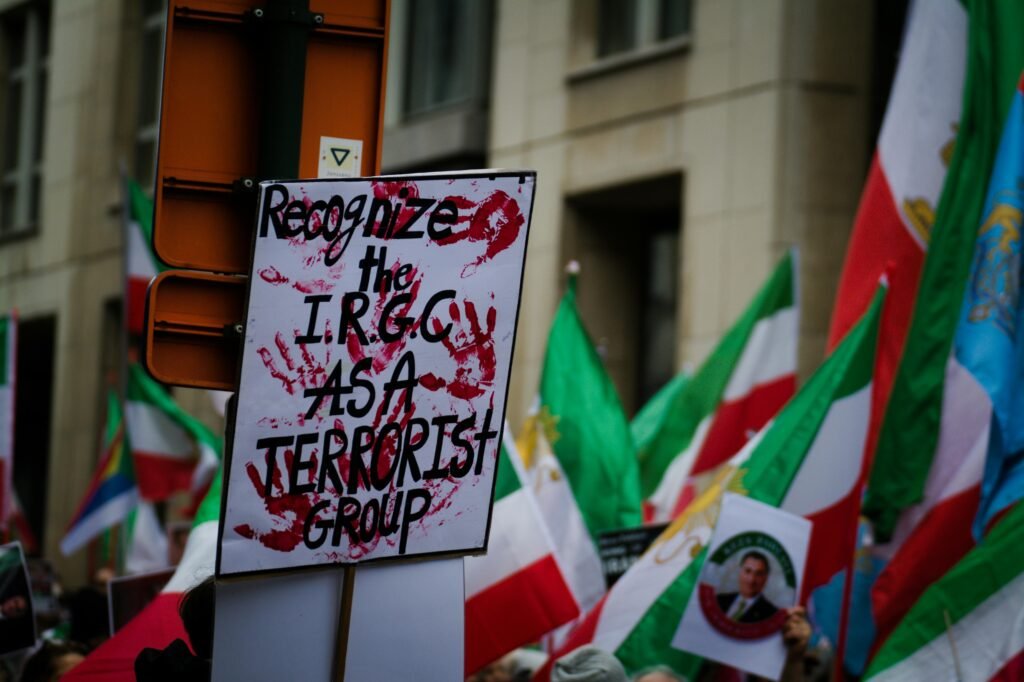
Protest in Brussels with flags and signs demanding IRGC recognition as a terrorist group.

The Global Terror Landscape in 2025: A Shifting Epicenter and an Adapting Enemy

Expert Comment — Security Programme January 2026 A decade after the peak of the Islamic State’s so-called “caliphate,” the global terrorism landscape has undergone a profound and lethal transformation. The epicentre has decisively shifted from the Middle East to the conflict-ridden Sahel region of Africa, while terrorist organisations have evolved into more decentralised, digitally savvy

The Global Terror Landscape in 2025: A Shifting Epicenter and an Adapting Enemy Read More »